
This primer is for staff of local governments in BC and is intended to help them capitalize on the real and immediate benefits of managing their natural assets.
This brief presents evidence of land use planning, spatial planning, territorial (or regional) planning, and ecosystem-based or environmental land use planning as tools that can strengthen land governance, improve economic opportunities based on sustainable management of land resources, and develop land use options that reconcile conservation and development objectives.
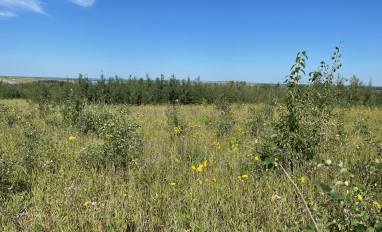
A presentation on a combination of approaches to manage vegetation and forest development, through the use of wood mulch, film mulch, pre-emergent herbicide, rototilling, hitchhiking native forbs with...
This paper documents an emerging strategy to manage natural assets such as woodlands, wetlands, and creeks in urban areas as part of a sustainable infrastructure strategy.
In Canada and globally, there is growing use of natural infrastructure (NI)—actively managed natural systems and resources such as plants, soil and wetlands—to address increasing risks related to climate change and to meet pressing environmental and economic needs.