Ressources de Gestion des Terres
Ressource
Organic constituents of wastewaters from the existing Athabasca oil sands extraction plant were characterized and quantified. Twenty-one chemical parameters were determined on a total of ten samples
Ressource
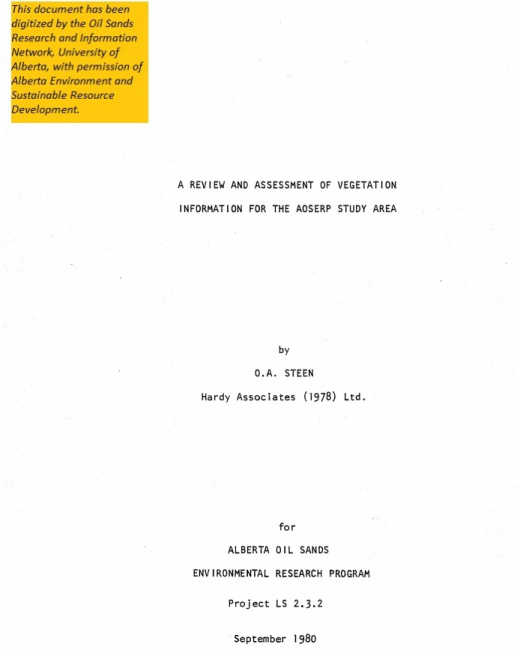
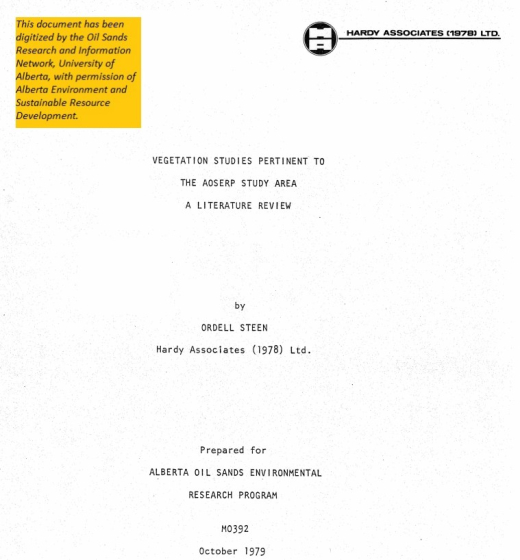
84 stands were chosen as representative of all the major vegetation types in the study area. The structure and species composition of each stand was described
Ressource
Vegetation workshop was held November 1979 to evaluate user needs for more detailed vegetation descriptions and maps and to review the results of the vegetation survey as a step towards meeting needs
Ressource
Review of provides basis for evaluating the current progress regarding vegetation descriptions in this area and for designing certain future vegetation studies.
Ressource
Provides recommendations based on the field survey and ground checking, for developing methodologies to enhance the detail on 1:50 000 vegetation maps (preliminary vegetation community classification)
Ressource
Author(s)
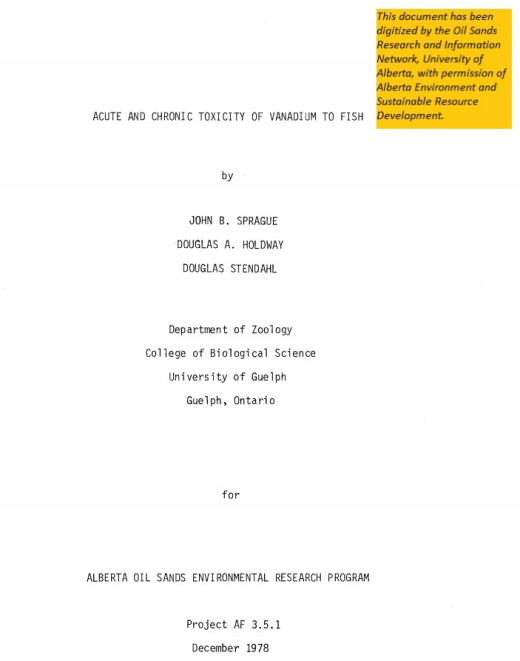
John Sprague
Douglas Holdway
Douglas Stendahl
Overall among the metals, vanadium was of moderate noncumulative toxicity. There should be an assessment whether aerial fallout of vanadium could create undesirable levels in slow-turnover lakes
Ressource
Author(s)
Tom Sneddon
D. Van De Maat
This list of papers and articles from professional and learned journals was assembled to provide a point of departure for hydrogeological and geomechanical studies in the Cold Lake Oil Sands
Ressource
Author(s)
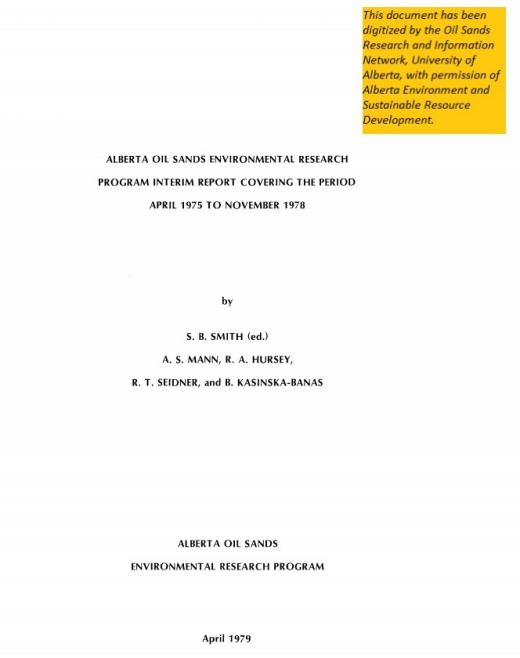
Stuart Smith
A.S. Mann
Bob Hursey
Reid Seidner
B. Kasinska-Banas
Interim Report summarizes AOSERP research from April 1975 to November 1978. The investigations referred to herein involved over 100 researchers from government agencies, universities, and consultants
Ressource
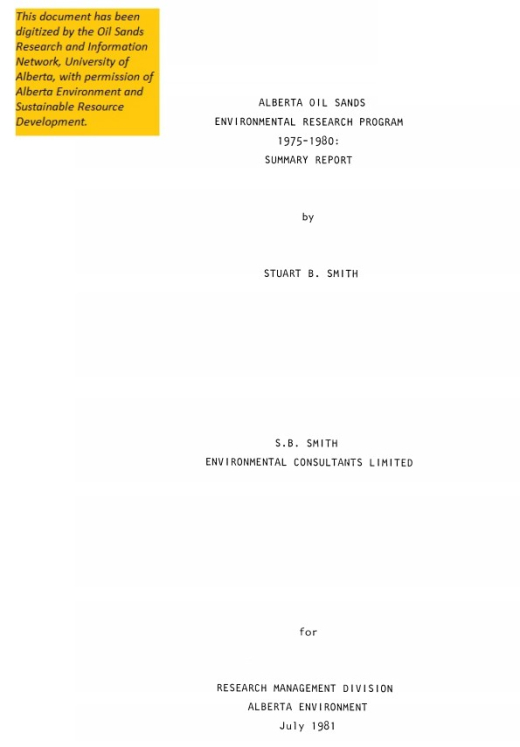
Summarize surveys and some research of a distinctly applied nature and to describe the manner in which AOSERP was carried out. Extensive research will be required to develop a predictive capability
Ressource
Author(s)
Calvin Sikstrom
John Martin
Effects of stream diversions on aquatic life, natural recovery of stream ecosystems from the effects of diversion, effectiveness of habitat restoration/enhancement techniques, and potential biomonitor