Ressources de connaissances sur les terres humides
Ressource
Author(s)
Wetland Knowledge Exchange
Resource Date:
January
2021
The Wetland Knowledge Exchange releases monthly newsletters that highlight new research, publications, news, interesting facts, events and more. In this edition you will learn about: National...
Ressource
Author(s)
Justine Townsend
Faisal Moola
Mary-Kate Craig
Resource Date:
November
2020
Nature-based solutions (NbS) to climate change mitigation—such as ecosystem protection or conservation, improved forest management practices, as well as afforestation—can significantly reduce global...
Ressource
Author(s)
Kristine Haynes
Jessica Smart
Brenden Disher
Olivia Carpino
William Quinton
Resource Date:
December
2020
This resource is available on an external database and may require a paid subscription to access it. It is included on the CCLM to support our goal of capturing and sharing the breadth of all...
Ressource
Beavers, Canada's national animal, provide many valuable ecosystem services including storage of water during droughts and flooding, creation of habitat for a variety of species, and improvement of...
Ressource
Resource Date:
February
2021
Growing up as a farm kid in central Alberta exposed me to many interests related to raising cattle and life on the family farm. Exploring and enjoying the willow thickets, aspen stands and wetlands...
Ressource
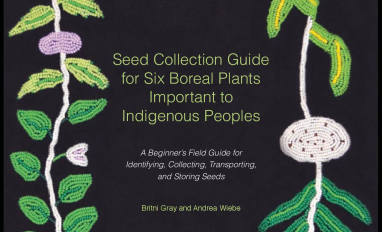
This publication is intended to be a source for plant identification and seed collection and is available to all who wish to use it. We aimed to make the information in this guide illustrative for...
Ressource
Author(s)
Michelle Knaggs
Samuel Haché
Scott Nielsen
Rhiannon Pankratz
Erin Bayne
Resource Date:
December
2020
Research Highlights: The effects of fire on birds in the most northern parts of the boreal forest are understudied. We found distinct differences in bird communities with increasing fire severity in...
Ressource
Author(s)
Natural Resources Canada (NRCan)
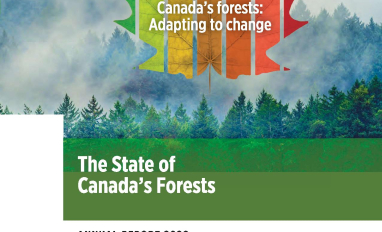
As Canadians, our forests permeate our lives, and Canada’s forest sector is an essential economic engine and major employer of Canadians, including in Indigenous and rural communities. The theme of...
Ressource
Resource Date:
January
2021
Ducks Unlimited Canada’s Satellite-Based Wetland Inventories: Advancements and Applications Presented by Becky Edwards, Ducks Unlimited Canada Ducks Unlimited Canada (DUC) is leading the effort to...
Ressource
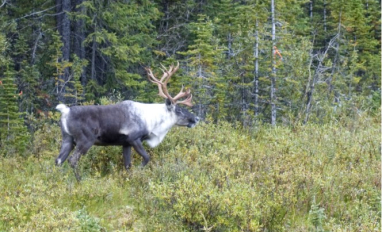
A team from the ABMI’s Caribou Monitoring Unit, studied links between habitat alteration (e.g., forest harvesting), primary productivity, moose, wolves, and caribou across the Canadian boreal forest