Ressources de Gestion des Terres
Ressource
Author(s)
Jian Zhang
Scott Nielsen
Jessica Stolar
Youhua Chen
Wilfried Thuiller
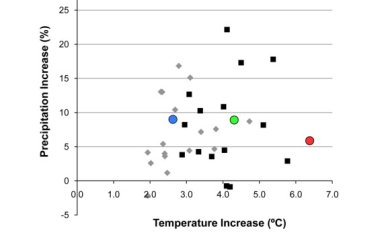
We found that 368 species (24%) may lose on average > 80% of their current suitable climates (habitats), while 539 species (35%) were projected to more than double their current suitable range
Ressource
Author(s)
Ryan Fisher
Troy Wellicome
Erin Bayne
Ray Poulin
Danielle Todd
Adam Ford
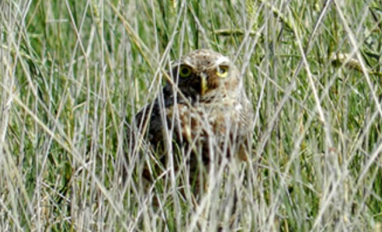
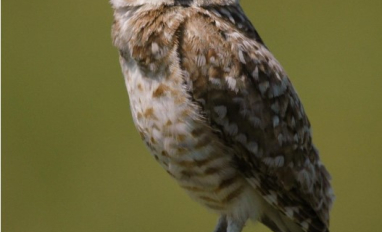
Frequency and intensity of extreme weather has increased against a backdrop of anthropogenic land change. Extreme rainfall during the breeding season reduced reproductive success of burrowing owls.
Ressource
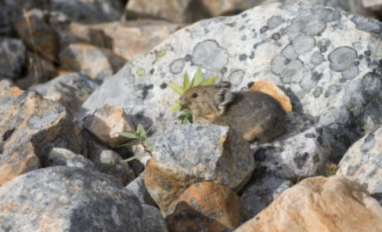
American Pika populations in Alberta will likely be capable of persisting throughout this century, although their survival will depend increasingly on successful vertical migration.
Ressource
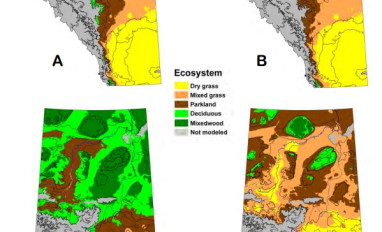
The Natural Regions and Subregions classification represents the state-of-the-art in ecological land classification in Alberta. This classification provides a valuable baseline for resource management...
Ressource
Author(s)
Shauna-Lee Chai
Amy Nixon
Scott Nielsen
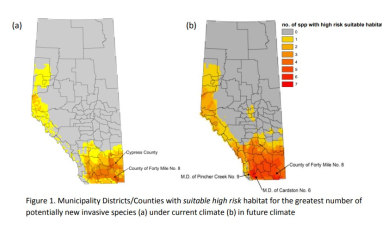
Assessed 16 potentially new invasive plant species not yet present in Alberta for their invasiveness and climate change-related risk
Ressource
This report is intended to provide some adaptation strategies that are focused on management of Burrowing Owls in the face of a changing climate.
Ressource
Author(s)
Christopher Shank
Amy Nixon
This report provides a broad overview of how Alberta species are likely to be affected by climate change by the 2050s. Amphibians were consistently found to be the most vulnerable to climate change
Ressource
Although ecological transitions are expected to be widespread, under even the least-change climate scenario, ecological change is not synonymous with the loss of biodiversity.
Ressource
Author(s)
Amy Nixon
Ryan Fisher
Diana Stralberg
Erin Bayne
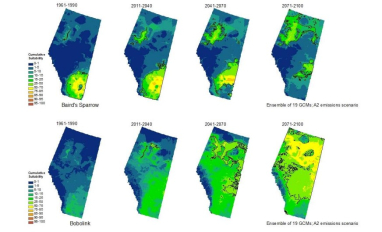
Climate suitability projections, and current distribution of grassland and cropland habitats in Alberta suggest that some climate-mediated range expansion of grassland songbirds is possible
Ressource
Author(s)
Christopher Shank
Erin Bayne
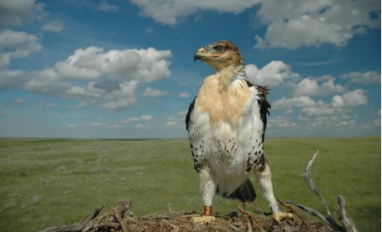
The Alberta Ferruginous Hawk Recovery Plan 2009 – 2014 identifies climate change as a factor potentially threatening the recovery of the species in Alberta.