Land Management Resources
Resource
Author(s)
Melanie Dickie
Robert Serrouya
Scott McNay
Stan Boutin
Predation by grey wolves Canis lupus has been identified as an important cause of boreal woodland caribou Rangifer tarandus caribou mortality, and it has been hypothesized that wolf use of human...
Resource
Resource Date:
September
2017
Rapid landscape alteration associated with human activity is currently challenging the evolved dynamical stability of many predator–prey systems by forcing species to behaviourally respond to novel...
Resource
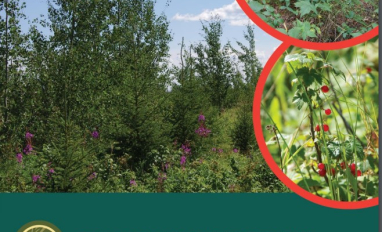
This report summarizes up to 39 years of plant community development trends on Syncrude’s reclaimed mine sites near Fort McMurray, Alberta.
Resource
Author(s)
Government of Alberta (GoA)
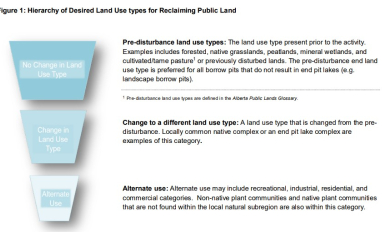
A primary goal of this Guideline is to emphasize the long-standing preference for reclaiming and restoring public lands to the pre-disturbance land use type.
Resource
Hosting effective online community events and meetings in rural, remote, and Indigenous Communities can be challenging. From tools and technology to logistics and engagement, this toolkit was created...
Resource
Author(s)
Paul Yeung
Richard Johnson
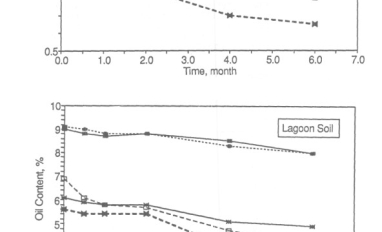
Commercially-produced enzymes were not effective in degrading oil in contaminated soil. Soil water repellency was reduced immediately by the enzyme treatment however it returned.
Resource
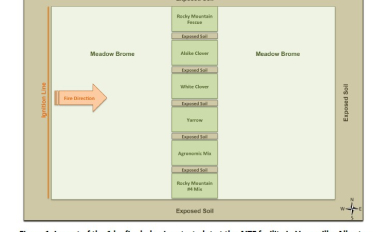
FPInnovations launched a multi-year study to determine whether a less-flammable, herbaceous species could replace the flammable grasses that typically colonize linear ROWs
Resource
Author(s)
Jessica Stolar
Scott Nielsen
Results suggest that sample weighting can be used to account for spatially biased presence-only datasets in species distribution modelling
Resource
Author(s)
Richard Schneider
Erin Bayne
Our climate envelope projections for the 2080s indicate that virtually all reserves will, in time, be comprised of different ecosystem types than today.
Resource
Author(s)
Diana Stralberg
Erin Bayne
Steven Cumming
Péter Sólymos
Samantha Song
Fiona Schmiegelow
For some boreal songbirds, limits to forest growth and succession may result in dramatic reductions in suitable habitat over the next century.