National

Content related to: National

The Monitoring Working Group of the NBCKC - Project page

The 2018 Action Plan for the Woodland Caribou (Rangifer tarandus caribou), Boreal Population, in Canada: Federal actions for the Threatened boreal caribou called for the collaborative development of national population monitoring protocols. In 2018, the National Boreal Caribou Knowledge Consortium (NBCKC) formed its first working group, the Monitoring Working Group, to investigate caribou population monitoring priorities, methods, constraints, and best practices.

Knowledge sharing, generation, and mobilization from the Monitoring Working group 

Knowledge sharing:

The Monitoring Working Group first conducted interviews with experts and knowledge holders from across Canada, to (i) investigate the diversity of monitoring priorities and constraints across the boreal range, (ii) document the variability in methods used, and (iii) capture the perspectives and concerns expressed by individuals and organizations. The information arising from these interviews was then used to produce a report, Boreal Caribou Monitoring in Canada Part I: Perspectives from the NBCKC Monitoring Working Group. 

Knowledge generation and mobilization:

Having established and documented the perspectives surrounding boreal caribou monitoring, the working group then aimed to develop a set of guidance tools for the design and selection of suitable methods for monitoring boreal caribou populations under different scenarios. These tools are intended to inform both the development of emerging monitoring programs as well as the re-evaluation of current monitoring practices. This work is ongoing, however, the working group has released a number of tools to the ever-evolving Boreal Caribou Monitoring Toolkit  ("the toolkit").

The Boreal Caribou Monitoring toolkit
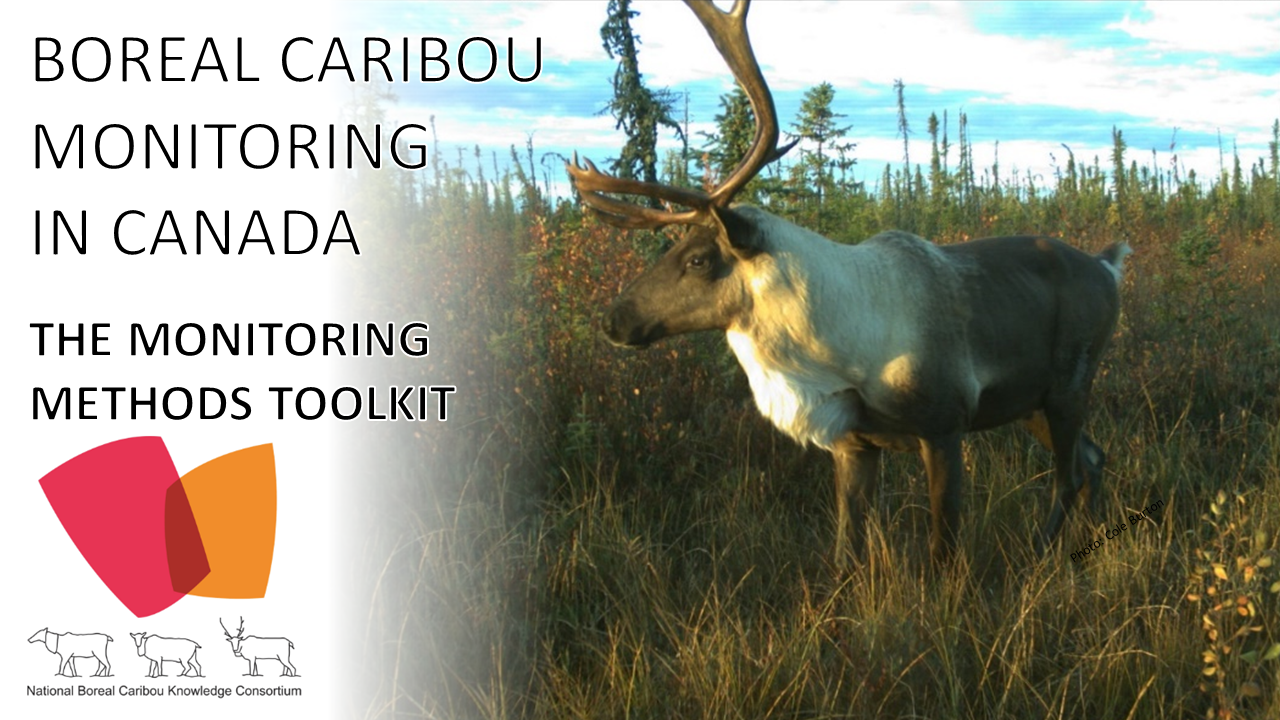
To explore the boreal caribou monitoring toolkit, click on the image.

The current objectives of the toolkit are:

  1. To centralize existing resources relevant to the monitoring of boreal caribou, 
  2. To provide valuable and accessible guidance for anyone engaged in, or planning to initiate, monitoring programs, and 
  3. To identify where knowledge gaps still exist, such that toolkit users may see opportunities to contribute resources to the toolkit. It is important to highlight that the toolkit is intended to be an 'evergreen' resource; as new resources and information are brought forward, these may be added to the toolkit as standalone pieces or may be incorporated into existing tools. To be clear, toolkit users are encouraged to submit resources and documents they feel would enhance the overall value of the toolkit. 

Be sure to view the Boreal Caribou Monitoring toolkit by clicking the image. 


Be sure to read more about the Monitoring Working Group by clicking here 


The Monitoring Working Group of the NBCKC - Project page

The 2018 Action Plan for the Woodland Caribou (Rangifer tarandus caribou), Boreal Population, in Canada: Federal actions for the Threatened boreal caribou called for the collaborative development of national population monitoring protocols. In 2018, the National Boreal Caribou Knowledge Consortium (NBCKC) formed its first working group, the Monitoring Working Group, to investigate caribou population monitoring priorities, methods, constraints, and best practices.

Knowledge sharing, generation, and mobilization from the Monitoring Working group 

Knowledge sharing:

The Monitoring Working Group first conducted interviews with experts and knowledge holders from across Canada, to (i) investigate the diversity of monitoring priorities and constraints across the boreal range, (ii) document the variability in methods used, and (iii) capture the perspectives and concerns expressed by individuals and organizations. The information arising from these interviews was then used to produce a report, Boreal Caribou Monitoring in Canada Part I: Perspectives from the NBCKC Monitoring Working Group. 

Knowledge generation and mobilization:

Having established and documented the perspectives surrounding boreal caribou monitoring, the working group then aimed to develop a set of guidance tools for the design and selection of suitable methods for monitoring boreal caribou populations under different scenarios. These tools are intended to inform both the development of emerging monitoring programs as well as the re-evaluation of current monitoring practices. This work is ongoing, however, the working group has released a number of tools to the ever-evolving Boreal Caribou Monitoring Toolkit  ("the toolkit").

The Boreal Caribou Monitoring toolkit
To explore the boreal caribou monitoring toolkit, click on the image.

The current objectives of the toolkit are:

  1. To centralize existing resources relevant to the monitoring of boreal caribou, 
  2. To provide valuable and accessible guidance for anyone engaged in, or planning to initiate, monitoring programs, and 
  3. To identify where knowledge gaps still exist, such that toolkit users may see opportunities to contribute resources to the toolkit. It is important to highlight that the toolkit is intended to be an 'evergreen' resource; as new resources and information are brought forward, these may be added to the toolkit as standalone pieces or may be incorporated into existing tools. To be clear, toolkit users are encouraged to submit resources and documents they feel would enhance the overall value of the toolkit. 

Be sure to view the Boreal Caribou Monitoring toolkit by clicking the image. 


Be sure to read more about the Monitoring Working Group by clicking here 


National Boreal Caribou Knowledge Consortium (NBCKC)

To learn more about the NBCKC, please visit our interactive story map, available in English and French!

The National Boreal Caribou Knowledge Consortium (NBCKC), which launched in 2018 under Canada’s federal action plan for boreal caribou, is a forum for knowledge sharing, knowledge generation, and knowledge mobilization. Members of the NBCKC represent federal, provincial and territorial governments, Wildlife Management Boards, Indigenous Peoples and communities, industry, environmental non-governmental organizations, and academic researchers. Several representatives who are part of the NBCKC are also members of a parallel body known as the Indigenous Knowledge Circle (IKC). The IKC advocates for the respectful inclusion of Indigenous Knowledge, supports the transition towards Indigenous-led management to support the recovery of caribou, and, provides opportunities for learning about what is working and not working in Indigenous contexts.

The NBCKC also includes several working groups and knowledge networks that were formed to assess what we already know, to ask what we still need to know, and to determine how to apply what we know to maximize caribou conservation and recovery goals. These groups currently include:

The NBCKC sets ambitious targets and deadlines in order to resolve remaining knowledge gaps by developing impactful guidance meant to inform caribou managers as they structure their respective programs. They have built a powerful interactive map and populated it with over 100 caribou projects, the majority of which involve Indigenous peoples. Despite boasting a large membership consisting of keen, skilled, and focused individuals, the NBCKC has been able to reach even higher levels of relevance and impact by joining our efforts with those of other initiatives. 

Follow this link to browse the repository of newsletters, guidance documents, best practices, tool kits and other resources that have been developed collaboratively by the NBCKC housed on our boreal caribou portal.


Caribou Genomics: A National Non-invasive Monitoring Approach for an Iconic and Model Species at Risk

Project Description:

This project is developing a foundational genomics platform to:

  1. enable long-term, non-invasive genomic monitoring of boreal caribou;
  2. allow for validated cross-compatibility among data generators; and,
  3. house data in an open access repository that supports analytical toolkits for use by our project partners.

The implementation of this genomic platform will allow comparisons through space and time to monitor the recovery, or continued loss, of caribou populations and their associated habitat.


Project Outcomes or Intended Outcomes:

  1. The development of a standardized methodology for generating individual specific genetic profiles, which will allow for comparable data among years, geographies and jurisdictions.
  2. The development of standardized genomics-based parameters suitable for use by Environment and Climate Change Canada as well as other project partners, that are targeted to small and declining caribou populations (affected by anthropogenic activities or climate change, e.g. southern ranges) in need of immediate management actions requiring the most comprehensive monitoring of population parameters.
  3. The generation of a platform of standardized boreal caribou genomic profiles providing the Receptor a cost-effective monitoring toolkit, access to new technologies by partners and a suitable framework for use in inter-laboratory genotype comparisons. Best practices in field collection will direct future monitoring work.
Organization: