Ressources de connaissances sur les terres humides
Ressource
Author(s)
Rajiv Tanna
Aaron Redman
Richard Frank
Tim Arciszewski
Warren Zubot
Frederick Wrona
John Brogly
Kelly Munkittrick
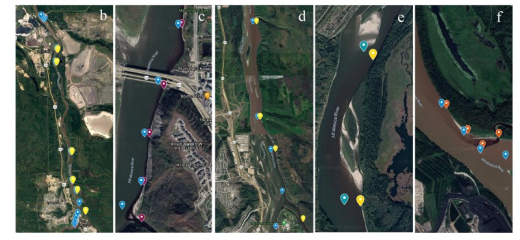
This resource is available on an external database and may require a paid subscription to access it. It is included on the CCLM to support our goal of capturing and sharing the breadth of all...
Ressource
Author(s)
Suyuan Yang
Owen Sutton
Eric Kessel
Jonathan Price
At the Nikanotee Fen Watershed, a pioneering reclamation project in the Athabasca Oil Sands Region, elevated sodium (Na+) in the porewater of mine-waste materials has been shown to migrate to the fen...
Ressource
Author(s)
Jin-Ping Xue
Chad Cuss
Tommy Noernberg
Muhammad Javed
Na Chen
Rick Pelletier
Yu Wang
William Shotyk
The functionality of dissolved organic matter (DOM) in natural waters largely depends upon its size and composition. Identifying the sources, associated properties and transport behavior of DOM is...
Ressource
Author(s)
Ducks Unlimited Canada (DUC)
The various applications of Ducks Unlimited Canada’s wetland inventories play a critical role in wetland conservation. They serve as key planning tools, helping people who live and work in the boreal...
Ressource
Author(s)
Ducks Unlimited Canada (DUC)
In order to protect boreal wetlands, we must first know where they are. This 6-minute video will show you how Ducks Unlimited Canada uses satellite data and remote sensing techniques to map wetlands...
Ressource
There is a need to define a common approach to wetland stewardship in the Yukon. The Policy for the stewardship of Yukon’s wetlands (“the policy”) represents the Government of Yukon’s approach to...
Ressource
Author(s)
Chantel Markle
Henry Gage
Alex Tekatch
Sophie Wilkinson
James Waddington
Boreal peatland ecosystems are generally resilient to low severity wildfire. However, climate change may increase wildfire intensity and frequency, potentially shifting wetlands to less wildfire...
Ressource
Author(s)
Rebecca Rooney
Lee Foote
Naomi Krogman
John Pattison
Matthew Wilson
Suzanne Bayley
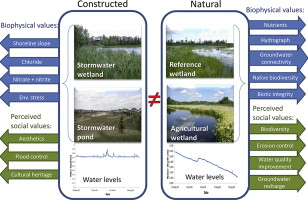
This resource is available on an external database and may require a paid subscription to access it. It is included on the CCLM to support our goal of capturing and sharing the breadth of all...
Ressource
The overall objective of this research is to obtain sufficient scientific data relevant to salinity in peatlands in northern climates to allow for the derivation of risk-based assessment and...
Ressource
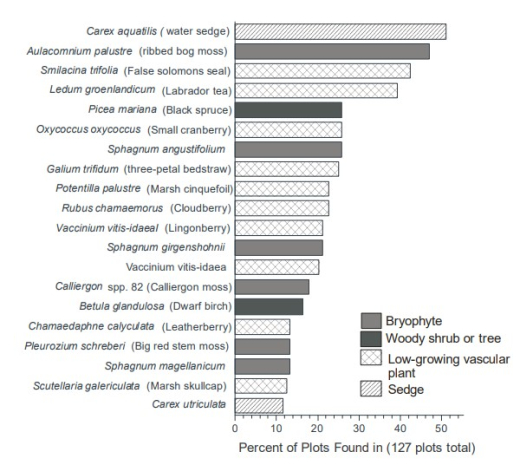
Field data on the abundance (or percent cover) of vascular plants, bryophytes, and soil mesofauna were obtained in the summer of 2008 and 2009 from nine produced water release sites in Alberta and...