
Meningeal worm, Parelaphostrongylus tenuis, is a nematode (roundworm) common throughout eastern and central Canada and USA. It lives in tissue spaces adjacent to the brain and spinal cord in white...
Abstract Caribou ( Rangifer tarandus) calf mortality during the neonatal period is commonly attributed to predation, particularly by gray wolves ( Canis lupus). However, neonate mortality remains...
Boreal woodland caribou ( Rangifer tarandus caribou) populations are declining because of increasing predation that is ultimately attributed to human‐caused landscape alterations and climate change...
This is the fall newsletter from the Caribou Recovery Program in Jasper National Park. Highlights include: Caribou recovery program update Rutting season Annual population surveys Remote camera...
With rates of biodiversity loss accelerating globally, debate exists regarding the most efficient ways of allocating resources to conserve species. Woodland caribou ( Rangifer tarandus caribou...
Human-induced environmental change is one of the biggest threats to global biological diversity, and the resulting environmental conditions have made it increasingly difficult for species to adapt and...
Abstract Recovering habitat is a central objective for conserving species imperiled by habitat alteration. Yet, determining when habitat is recovered is challenging. For terrestrial wildlife, habitat...
This resource is available on an external database and may require a paid subscription to access it. It is included on the CCLM to support our goal of capturing and sharing the breadth of all...
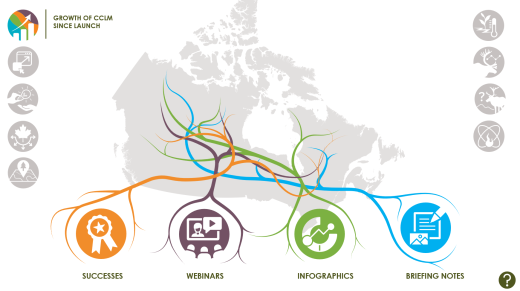
This interactive Story Map summarizes the top conservation topics of 2024 on the CCLM portal and the CCLM Knowledge Exchange program activities of 2024.