
Land Management Search Results
Land Management Search Results
Displaying:
3321 - 3340 of 3403
To narrow down your search results use the filters at left to find Contacts, active Projects, specific resource Formats, News & Events or, for example view only resources from a specific Organization, or about specific Disturbance Types.
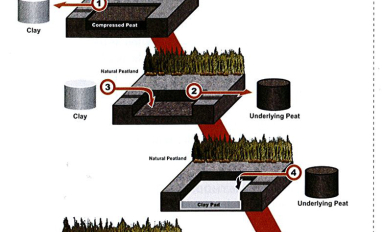
Wellsite Clay Pad Removal and Inversion – A Peatland Restoration Pilot Project
Resource
This article in Canadian Reclamation (Issue 1, Vol 12, pages 10-13) describes the wellsite clay pad removal and inversion technique applied by the NAIT Centre for Boreal Research in a peatland...
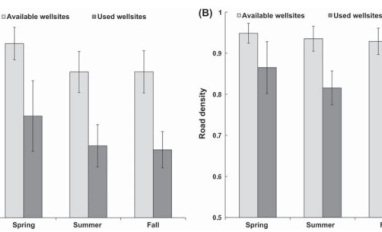
Wellsite Selection by Grizzly Bears Ursus arctos in West-central Alberta
Resource
Oil and gas development is widespread in west – central Alberta, yet little is known about the potential impacts of oil and gas activities on grizzly bear habitat use. Focusing on the impacts of one...
Wet Pond Reclamation at Suncor
Resource
The issue of how to best manage the wastes resulting from the bitumen extraction processes is complex. When clays contained in the oil sands are subjected to the Clark Hot Water Extraction Process a...
Wetland Innovation Workshop 2025: Innovation in a Changing World
Event
Event Date and Time
September 24th, 2025 at 8:30am MST to September 24th, 2025 at 4:00pm MST
Grande Prairie, AB
Contact
Organization
On behalf of the Boreal Wetland Centre and the Boreal Team of Ducks Unlimited Canada, it is our pleasure to invite you to join us for the second annual Wetland Innovation Workshop! This year's theme –...
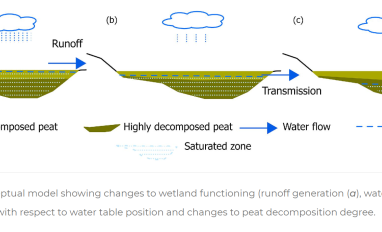
Wetlands as Integral Parts of Surface Water–Groundwater Interactions in the Athabasca Oil Sands Area: Review and Synthesis
Resource
Wetlands comprise unique water storage and conveyance mechanisms that maintain landscape integrity under the sub-humid climate in the Athabasca Oil Sands Area. In addition to their internal function...
What Lies Beneath: How Alternatives to Clearcutting Affect Understory Vegetation in British Columbia's Coastal Forests
Resource
Our coastal montane forests are a treasure trove of biodiversity, offering crucial cultural, social, and ecological benefits while also serving as valuable economic resources. Yet, high demand for...
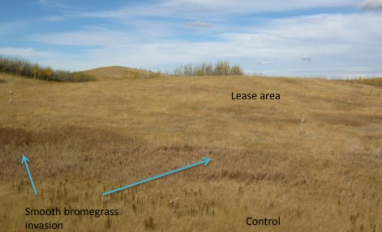
“When is Reclamation Success Achieved, Using the 2010 Reclamation Criteria as a Guide?”
Resource
The 2010 Reclamation Criteria for Wellsites and Associated Facilities for Native Grasslands was released in June of 2011 to relieve then current backlog of processing Reclamation Certificate...
When to Monitor and When to Act: Value of Information Theory for Multiple Management Units and Limited Budgets
Resource
Abstract: The question of when to monitor and when to act is fundamental to applied ecology and notoriously difficult to answer. Value of information (VOI) theory holds great promise to help answer...

Where and for How Long? Building on Existing Efforts to Support and Track Tree Planting and its GHG Contribution in the Western Boreal Region
Resource
Céline Boisvenue presents a lecture to the Canadian Institute of Forestry on GHG emissions in Forestry / Forest Ecology. In this talk, various models are introduced that could help viewers quantify...
Which Linear Feature Characteristics Relate to Wildlife Use?
Resource
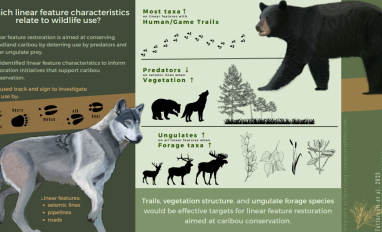
Linear feature restoration is aimed at conserving woodland caribou by deterring use by predators and other ungulate prey. This infographic by Sunny Tseng describes the key results from a paper by Erin...
White Pine Blister Rust: Knowledge, Control and Innovation
Resource
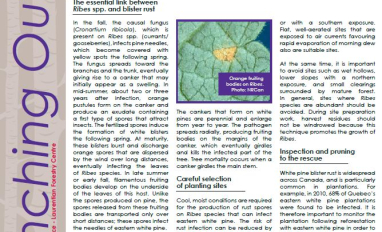
What is the major threat hanging over eastern white pine? White pine blister rust, which is caused by an exotic fungus, has been present in North America since the beginning of the 20th century. By...