Ressources de connaissances sur les terres humides
Ressource
The Wetland Knowledge Exchange releases monthly newsletters that highlight new research, publications, news, interesting facts, events and more. In this edition you will learn about: Ducks Unlimited...
Ressource
The Wetland Knowledge Exchange releases monthly newsletters that highlight new research, publications, news, interesting facts, events and more. In this edition you will learn about: Alberta Beaver...
Ressource
Author(s)
Stephen Moran
Mark Trudell
Terry Macyk
Between 1979 and 1988, the Plains Hydrology and Reclamation Project (PHRP) investigated interactions of groundwater, soils, and geology and successful reclamation of surface coal mines in the plains...
Ressource
Author(s)
Hans Boerger
Mike MacKinnon
Bill Hunter
The Clark hot water process currently used for extracting bitumen from the Athabasca oil sands results in large volumes of clay fines containing small amounts of residual bitumen. One possible way of...
Ressource
The issue of how to best manage the wastes resulting from the bitumen extraction processes is complex. When clays contained in the oil sands are subjected to the Clark Hot Water Extraction Process a...
Ressource
Author(s)
Tim Alamenciak
Dorian Pomezanski
Nancy Shackelford
Stephen Murphy
Steven Cooke
Line Rochefort
Sonia Voicescu
Eric Higgs
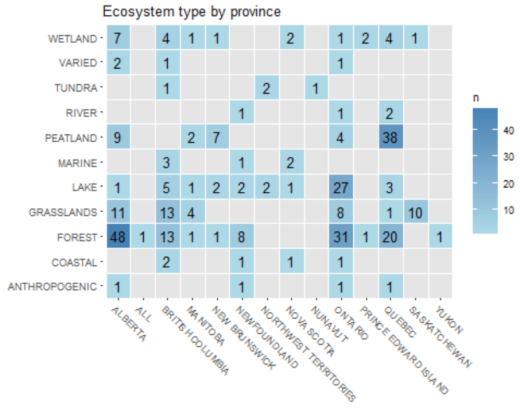
Much has been achieved by research into ecological restoration as a nature-based solution to the destruction of ecosystems, particularly in Canada. We conducted a national-level synthesis of Canadian...
Ressource
Author(s)
Kristyn Mayner
Jessie Lavallee-Whiffen
James Kenyon
Jane Bailey
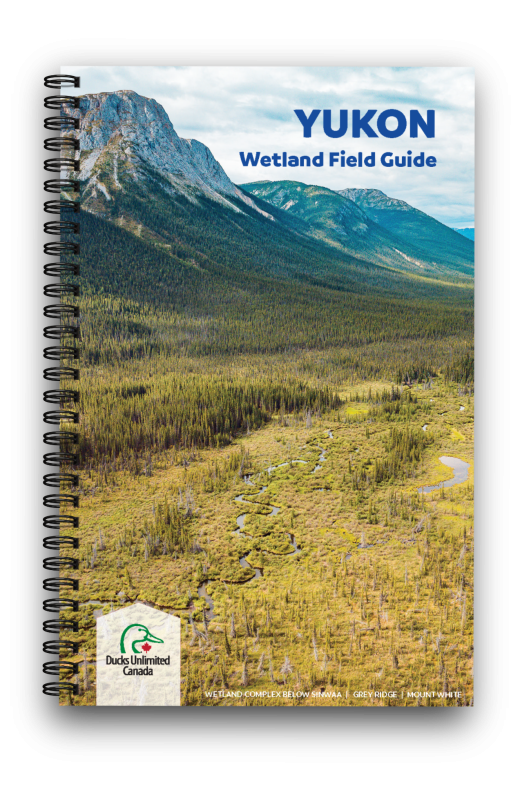
The Yukon Wetland Field Guide is a comprehensive, visual resource that introduces users to the diverse wetlands of Yukon and their significance to both the landscape and Indigenous communities. This...
Ressource
Author(s)
Simin Wang
Ting Liu
Erxiong Zhu
Chen He
Quan Shi
Xiaojuan Feng
This resource is available on an external database and may require a paid subscription to access it. It is included on the CCLM to support our goal of capturing and sharing the breadth of all...
Ressource
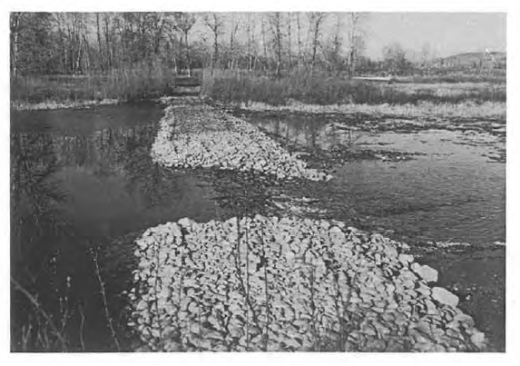
In the 70' s a section of the Bow River about 20 km south of Calgary, was diverted to protect a school bus road. A dyke with a 1.5 metre diameter culvert was constructed across the upstream end of the...
Ressource
This paper describes the co-operative participation of the Alberta Government Departments of Forestry, Lands and Wildlife; Recreation and Parks; Environment; the County of Parkland and TransAlta...