Ressources de connaissances sur les terres humides
Ressource
Author(s)
Colin McCarter
Stephen Kaufman
Brian Branfireun
James Waddington
Despite their importance in carbon cycling and catchment runoff dynamics, the hydrology of temperate peat swamps in response to changing hydrometeorological conditions is largely understudied. We...
Ressource
Author(s)
Holly Kinas
Kerri O'Shaughnessy
Amy Mcleod
The work of beavers supports watershed and ecological health across the landscape. Many of the benefits beavers provide directly benefit humans: attenuate flood peaks, store water during droughts...
Ressource
Author(s)
Boreal Ecosystem Recovery and Assessment (BERA)
The 2024 issue of The Edge summarizes the following key findings: Plan A better understanding of passive recovery trajectories will help guide restoration planning LiDAR is a powerful planning tool...
Ressource
Author(s)
Jody Daniel
Rebecca Rooney
The hydroperiod (i.e., the length of time ponded water is present) of prairie potholes is sensitive to climate change. Because snowmelt runoff is the largest contributor to ponded water amounts, a...
Ressource
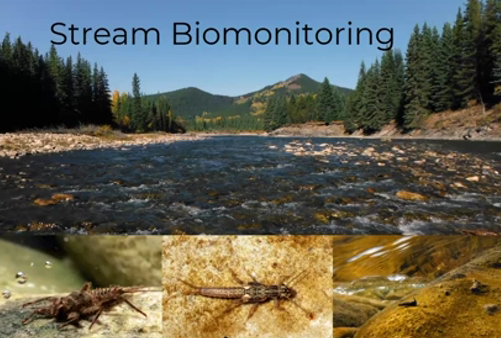
Aquatic invertebrates, often overlooked but essential components of aquatic ecosystems, offer valuable insights into the health and intactness of our waters. In this presentation, we embark on a...
Ressource
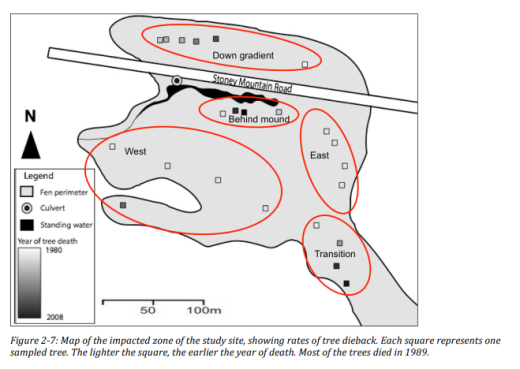
Linear disturbances such as powerline rights of way, seismic lines and roads are common in areas of intensive resource development. Roads that bisect wetlands can alter their hydrologic connectivity...
Ressource
Author(s)
Jessie Lavallee-Whiffen
Kristyn Mayner
Chantelle Abma
Video series from Ducks Unlimited Canada, discussing the fascinating and ecologically important dynamics of carbon in Canada’s peatlands, and our role in maintaining these crucial ecotypes. Part 1...
Ressource
A resource to improve understanding of wetlands in the Bow River region to promote conservation through protection and restoration. Wetlands are natural assets that have a vital role in climate change...
Ressource
Author(s)
Anthony Stewart
Meghan Halabisky
Chad Babcock
David Butman
David D’Amore
Monika Moskal
Inland wetlands are critical carbon reservoirs storing 30% of global soil organic carbon (SOC) within 6% of the land surface. However, forested regions contain SOC-rich wetlands that are not included...
Ressource
Author(s)
Emily Jones
Laura Chasmer
Kevin Devito
Christopher Hopkinson
Climate change in northern latitudes is increasing the vulnerability of peatlands and the riparian transition zones between peatlands and upland forests (referred to as ecotones) to greater frequency...