Wetland Knowledge Resources
Resource
Author(s)
Xiaoyu Li
Julie Talbot
James King
Meng Wang
Resource Date:
October
2023
Dust deposition can fertilize nutrient-limited peatlands and affect their plant assemblages and ecosystem functions, but the effects of local road dust on peatlands have seldom been studied. Here, we...
Resource
Author(s)
Teemu Juselius-Rajamäki
Minna Väliranta
Atte Korhola
Resource Date:
October
2023
Peatlands are the most dense terrestrial carbon stock and since the last glacial epoch northern peatlands have accumulated between 400 and 1000 Gt of carbon. Although the horizontal development...
Resource
The Wetland Knowledge Exchange releases monthly newsletters that highlight new research, publications, news, events and more. In this edition you will learn about: Peatland Atlas: A global look at...
Resource
Author(s)
Jessica Allan
Mélina Guêné-Nanchen
Line Rochefort
David Douglas
Jan Axmacher
Resource Date:
October
2023
Abstract The provision of critical ecosystem services like carbon sequestration by peatlands has been degraded around the globe. Peatland restoration represents an opportunity to tackle the twin...
Resource
An aquatic mesocosm facility consisting of thirty 15,000 L tanks was constructed in Vegreville, Alberta to support environmental research.
Resource
Author(s)
Daniel Miller
Ivan Scales
Michael Mascia
Resource Date:
January
2023
DESCRIPTION Groundbreaking book that examines the essential contribution of the social sciences to understanding and conserving biodiversity across the globe Authored by leading scholars at the nexus...
Resource
Author(s)
Craig Mahoney
Joshua Montgomery
Stephanie Connor
Danielle Cobbaert
Abstract Boreal wetlands within the oil sands region of Alberta, Canada, are subject to natural and anthropogenic pressures, resulting in the need for monitoring these sensitive ecosystems to ensure...
Resource
Author(s)
Jim Davies
Ryan Melnichuk
Craig Aumann
Zhongzhi Chen
Brian Eaton
An aquatic mesocosm facility consisting of thirty 15,000 L tanks was constructed in Vegreville, Alberta to support environmental research. In 2017, an experiment was conducted as an inaugural run for...
Resource
Author(s)
Felix Faichney
Jean Birks
Margie Wood
Brandon Paquette
Stephen Slongo
The Fort McKay Métis Nation is using its Indigenous Knowledge to inform a community-led water monitoring program on the Red River, also called the McKay River, an important water source for their...
Resource
Author(s)
New Brunswick Environmental Network
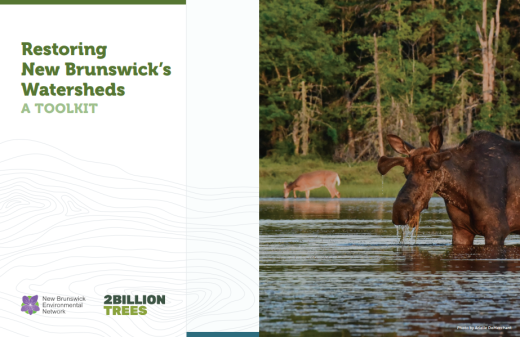
The objective of this toolkit is to create a hub of information needed by watershed and restoration groups who want to create a riparian reforestation project. This toolkit hopes to take you through...